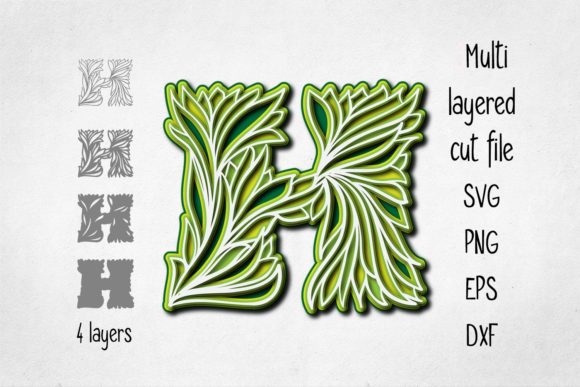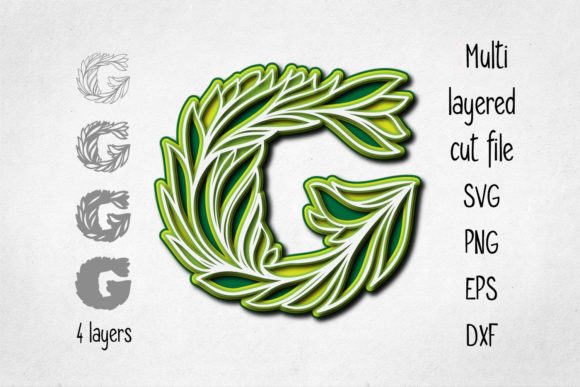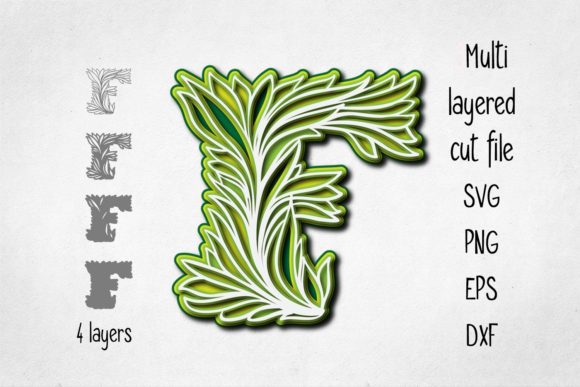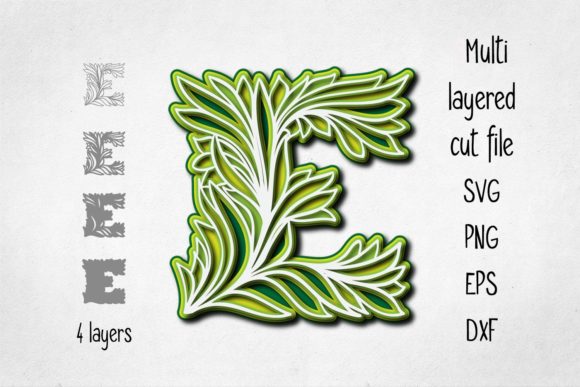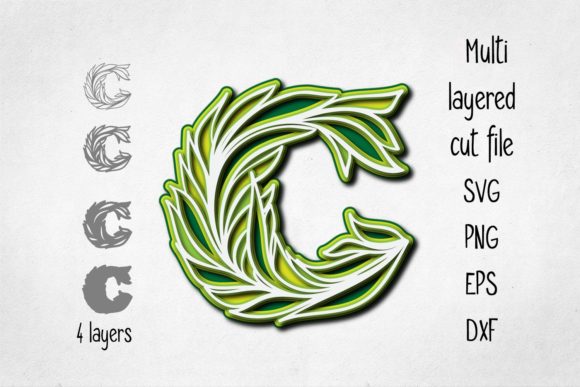
3D Alphabet Layered Letter Design
Imagine a letter that doesn’t just sit on the page—but rises, recedes, casts shadow, and invites touch. That’s the quiet power of a 3D Alphabet Layered Letter: not CGI spectacle or VR immersion, but a tangible, dimensional reinterpretation of typography built through physical or digital layering. It’s letterforms constructed like architectural models—foreground, midground, background—each plane contributing depth, contrast, and intention.
What makes it compelling isn’t novelty alone. It’s utility: a layered letter communicates hierarchy without words, adds tactile resonance to flat media, and turns simple text into a focal point with built-in visual rhythm. Unlike pure 3D rendering—which often demands specialized software and rendering time—a layered approach is accessible. You can cut foam board, stack vinyl, align vector shapes in Illustrator, or even arrange paper layers for stop-motion animation. The technique bridges craft and digital fluency, making it equally relevant in a classroom, a branding pitch, or a social media carousel.
Creative Possibilities Beyond Decoration
A 3D Alphabet Layered Letter isn’t just “cool typography.” Its strength lies in how meaning shifts with structure. A bold sans-serif “E” with deep recessed layers might suggest stability and trust—ideal for a financial educator’s workshop banner. A delicate script “L” with translucent acrylic layers could evoke lightness and flow—perfect for a yoga studio’s seasonal newsletter. The letter becomes both symbol and system.
Here are grounded applications across real-world contexts:
- Small business signage: A café’s neon-lit “C” made from stacked acrylic sheets—each layer subtly tinted (warm amber, soft cream, clear)—creates shifting color as light passes through and viewers move. No moving parts, just intelligent layering.
- Educational tools: Teachers use layered letters in early literacy kits—not to impress, but to reinforce letter formation. A “B” built from three foam layers (base curve, upper loop, lower loop) lets students trace each shape separately before assembling the whole. Kinesthetic + visual = stronger retention.
- Digital content: Bloggers and newsletter designers apply subtle layering in Canva or Figma—adding a 1–2px offset shadow *and* a duplicate layer shifted slightly with reduced opacity. It’s not heavy 3D, but enough depth to lift headlines off the screen without sacrificing readability.
- Print collateral: A freelance illustrator creates a limited-run poster series where each letter of a client’s name is die-cut from different textured papers (linen, kraft, metallic foil), then mounted at staggered heights. The result is elegant, tactile, and instantly memorable—no QR codes needed.
Adapting for Your Audience and Platform
How you build and present a 3D Alphabet Layered Letter depends entirely on who’s receiving it—and where. A Kickstarter campaign needs immediate visual impact: go bold, high-contrast, and camera-ready. A kindergarten teacher needs durability, safety, and clarity—no sharp edges, no tiny parts, no glare. A LinkedIn post? Prioritize clean composition and legibility at thumbnail size; skip intricate shadows that vanish on mobile.
Consider these practical filters before starting:
- Context first: Is this for print, web, video, or physical installation? A layered letter designed for Instagram Stories must hold up at 1080×1920 px—even if simplified. A wall-mounted art piece can embrace texture and scale.
- Audience tolerance: Tech founders may appreciate subtle parallax effects in a web banner. Parents browsing a preschool website respond better to warm, friendly, uncluttered forms—even if layered, the letter must feel approachable, not technical.
- Production reality: If you’re a solo blogger with 90 minutes and free design tools, focus on two-layer contrast (e.g., base letter + soft drop shadow + light inner glow). Save multi-material builds for when time, budget, and purpose align.
Staying Clear, Consistent, and Original
Layering introduces complexity—so intentionality is non-negotiable. A common misstep is adding depth just because it’s possible. Ask: Does this layer serve a function? Does it guide the eye? Reinforce tone? Clarify structure? If not, remove it.
Consistency emerges from constraints—not rules. Choose one primary method (e.g., “all letters use exactly three layers: base, mid-tone overlay, highlight edge”) and stick to it across a project. That discipline creates cohesion, whether you’re designing a full alphabet for a brand guideline or a single hero letter for an event poster.
Originality rarely comes from inventing new techniques—it comes from thoughtful application. Try this: take a standard font you know well (like Helvetica Neue), then rebuild one letter using only geometric shapes (circles, rectangles, triangles) stacked to imply depth. No curves, no gradients—just shape, position, and contrast. You’ll see how much expressive range lives in restraint.
Getting Started—No Studio Required
You don’t need a laser cutter or 3D modeling license to explore. Start small and tactile:
- Grab three sheets of colored paper. Cut identical capital “A”s. Stack them with 1–2mm gaps—use toothpicks or thin cardboard spacers. Photograph from straight on and at a slight angle. Notice how light defines form.
- In any vector app, draw a letter. Duplicate it twice. Offset the top copy 2px up/right, fill with white, reduce opacity to 30%. Offset the middle copy 1px down/left, fill with black, set opacity to 15%. Keep the base layer solid. You’ve built dimension with two clicks.
- Use free resources: Google Fonts includes open-source typefaces with alternate weights and styles—mix Light and Black versions of the same family to simulate layering in text-only layouts.
Remember: the goal isn’t perfection. It’s presence. A 3D Alphabet Layered Letter works when it makes people pause—not because it’s complicated, but because it feels considered. Because it carries weight, literally or perceptually. Because it transforms something familiar into something felt.
So pick one letter. One context. One constraint. Build it—not to impress, but to clarify. To emphasize. To connect. That’s where layered letters earn their place: not as decoration, but as deliberate, dimensional communication.