3D Alphabet Layered Letter A: What You Actually Need to Know Before Using It
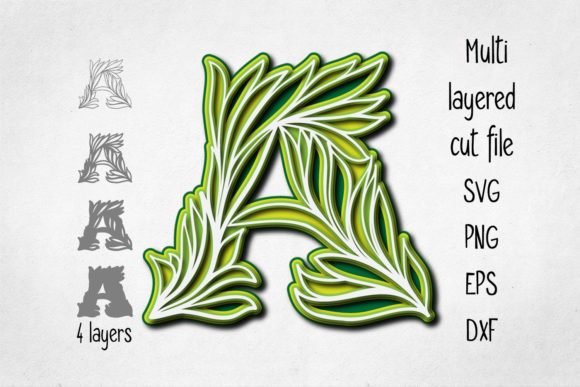
That striking, shadowed, multi-tiered A you’ve seen in logo mockups, social media banners, or product packaging? It’s likely a 3D Alphabet Layered Letter A — a design asset built with depth, dimension, and intentional visual hierarchy. Unlike flat vector letters, this style uses stacked layers (often in SVG or layered PSD files) to simulate light, perspective, and materiality. People reach for it when they want immediacy, impact, or a tactile feel — especially in branding, merch design, educational visuals, or digital signage. But here’s what most don’t realize until it’s too late: not every layered A works the same way across tools, platforms, or real-world applications.
Assuming “Layered” Means “Ready to Use” — and Why That Backfires
Many creators download a 3D Alphabet Layered Letter A expecting plug-and-play flexibility — only to find it breaks in Canva, fails to export cleanly from Figma, or looks pixelated on a large-format print. The issue isn’t the letter itself; it’s the mismatch between file structure and workflow. Layered assets often rely on specific software features: blending modes like Multiply or Overlay, clipping masks, or embedded textures that don’t translate outside Adobe Creative Cloud or Procreate. One freelance designer spent two days reworking a client’s Instagram carousel because the layered A she licensed used rasterized shadows — great on screen, but unusable when scaled for a trade show backdrop.
Before downloading or buying, ask: What format is it delivered in? Look for native support — SVG with preserved groups, layered PSD with labeled folders, or .GLB files if you’re working in 3D space. Avoid “flat PNGs labeled ‘3D’” unless you only need static web use. And never assume layer names are intuitive: “Shadow_Layer_3” tells you nothing about opacity, blend mode, or whether it’s linked to a smart object.
Overlooking Scalability and Output Context
A 3D Alphabet Layered Letter A that shines at 200px on a website header may collapse visually at 2000px on a storefront sign. Depth relies on contrast, spacing, and relative sizing — all of which shift dramatically when scaled. Common oversights include:
- Using raster-based highlights or drop shadows that blur or alias when enlarged;
- Ignoring stroke-to-fill ratios — thin bevels vanish at small sizes, thick ones overwhelm at large ones;
- Forgetting color accessibility: metallic gradients or low-contrast layering can fail WCAG contrast checks.
A small business owner ordered custom vinyl decals using a layered A downloaded from a free resource site. The subtle inner glow looked elegant online — but under direct sunlight, it disappeared entirely against the white background. The fix? Replacing the glow with a solid, slightly offset outline in a high-contrast secondary color — simple, scalable, and legible at any distance.
Misjudging Licensing and Technical Constraints
Licensing is where good intentions meet hard limits. Some 3D Alphabet Layered Letter A assets come with commercial licenses — but restrict use in editable templates, SaaS products, or NFTs. Others prohibit modification altogether, meaning you can’t recolor, simplify, or isolate layers without violating terms. Worse, many free downloads bundle fonts or textures with separate licenses you’re expected to track manually.
Check three things before committing:
- Usage scope: Does “commercial use” cover your exact scenario — e.g., selling physical mugs vs. embedding the letter in an app UI?
- Modification rights: Are you allowed to flatten layers, adjust lighting, or extract individual components?
- Attribution requirements: Even if not required, consider whether crediting the creator aligns with your brand voice — especially in education or nonprofit contexts.
Skipping the “Layer Audit” — and Paying for It Later
Not all layers serve equal purpose. A well-built 3D Alphabet Layered Letter A separates structural elements (base shape, bevel, ambient occlusion), lighting (key light, fill light, rim highlight), and surface treatment (grain, gloss map, texture overlay). Skipping an audit means missing opportunities — or introducing errors.
Try this quick check before editing:
- Turn off the top layer — does the letter still read clearly? If not, the base shape may be under-designed.
- Toggle visibility on shadow layers one by one — do any cast unrealistic angles or overlap awkwardly?
- Zoom to 400% — are edges crisp? Are raster layers aligned to pixels (not subpixels)?
One educator building literacy worksheets assumed a layered A would help students visualize letter formation. But the “depth” came from overlapping semi-transparent shapes — confusing rather than clarifying. She swapped to a version with clean, labeled layers: one for stroke path, one for interior fill, one for directional highlight. Suddenly, she could animate each part step-by-step in her LMS.
Choosing Based on Aesthetics Alone — Without Testing Real Workflows
It’s easy to fall for dramatic lighting, chrome finishes, or glass-like refractions. But aesthetics shouldn’t override function. Ask yourself: Where will this live, and how will it be used? A glossy 3D Alphabet Layered Letter A may look stunning in a portfolio, but it’ll compete with text overlays in a video thumbnail or clash with a muted brand palette.
Better approach: test early, test small. Drop the layered A into your actual project file — not just a blank canvas. Try exporting at your target resolution and format. Run it through a free contrast checker. Print a 2×2 inch sample. See how it behaves next to your headline font, your CTA button, or your brand’s primary color.
Remember: dimension should enhance communication — not distract from it. A restrained, well-proportioned layered A with thoughtful spacing and consistent lighting often outperforms flashier alternatives in real-world use.
Final Thought: Depth Is a Tool, Not a Default
A 3D Alphabet Layered Letter A isn’t inherently better than a flat one — it’s just different. Its value lies in intentionality: using layering to guide attention, imply material, or reinforce brand personality. When chosen and applied with awareness — not just visual appeal — it becomes a precise, versatile element in your design toolkit. Start small, verify compatibility, prioritize clarity over complexity, and always match the layer logic to your audience’s context. That’s how depth earns its place — not as decoration, but as deliberate design.