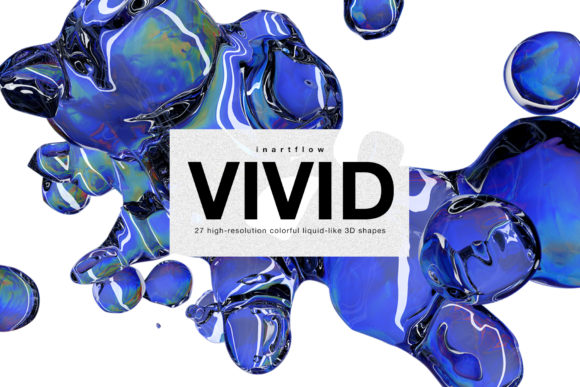
Liquid-Like 3D Shapes: Redefining Digital Expression in an Era of Fluid Interaction
In today’s rapidly evolving digital landscape, the boundaries between design, development, and user experience are dissolving—not through abstraction, but through intentionality. At the heart of this shift is a subtle yet powerful aesthetic and technical paradigm: Liquid-Like 3D Shapes. More than a visual trend or rendering technique, Liquid-Like 3D Shapes represents a synthesis of physics-aware modeling, real-time interactivity, and human-centered form language. It describes three-dimensional geometry that behaves with organic responsiveness—rippling on hover, coalescing on scroll, or subtly deforming to reflect data states—without sacrificing clarity, performance, or purpose.
What Exactly Are Liquid-Like 3D Shapes?
Liquid-Like 3D Shapes are not defined by a single software tool or shader effect. Rather, they emerge from a deliberate convergence of three foundational elements:
- Dynamic topology: Geometry that adapts resolution and structure in response to interaction or context—e.g., a sphere that softens its edges when approached by a cursor, or a logo that transitions smoothly between solid and fluid states based on viewport width.
- Physics-informed motion: Not full simulation, but lightweight approximations of surface tension, viscosity, or inertia—applied selectively to reinforce meaning. A dashboard widget might “drip” new metrics like viscous ink; a navigation icon might swell and rebound like water held in a membrane.
- Contextual fidelity: The shapes retain semantic legibility across devices and conditions. They don’t distort for distortion’s sake—they respond to signal: scroll depth, time-on-page, input modality (touch vs. pointer), or even ambient light detected via device APIs.
This is distinct from purely procedural generative art or high-fidelity fluid simulations used in VFX. Liquid-Like 3D Shapes prioritize intentional responsiveness over realism—designed to feel intuitive, not illustrative. They’re built to be performant at scale, embeddable in web interfaces, and accessible by default—supporting reduced-motion preferences and screen readers through semantic markup and fallback behaviors.
Fitting Into Broader Industry Shifts
Liquid-Like 3D Shapes didn’t appear in isolation. They’re both symptom and catalyst of deeper movements across technology, design, and business practice.
A Response to Interface Fatigue
After years of flat design minimalism and then skeuomorphic resurgence, users now exhibit fatigue toward static, rigid UIs—even those labeled “modern.” Research from the Nielsen Norman Group shows rising bounce rates on pages where visual hierarchy fails to mirror cognitive flow. Liquid-Like 3D Shapes address this by reintroducing tactile continuity: surfaces that invite engagement without demanding attention. Unlike parallax or auto-rotating carousels, these shapes respond only when meaningfully triggered—making interaction feel less like navigation and more like dialogue.
Alignment with Real-Time Data Culture
As businesses increasingly operate on live metrics—from supply chain dashboards to customer sentiment feeds—the visual language of data must evolve beyond bar charts and gauges. Liquid-Like 3D Shapes allow quantitative information to occupy spatial, embodied forms. For example, a SaaS company’s usage heatmap might render as a topographic terrain where elevation corresponds to active session density—and subtle liquid oscillation indicates growth velocity. This isn’t decorative; it leverages spatial cognition to accelerate pattern recognition.
Enabling Cross-Functional Collaboration
Traditionally, 3D assets lived in silos: modeled by specialists, animated by riggers, integrated by engineers. Liquid-Like 3D Shapes lower that barrier. Tools like React Three Fiber, Three.js, and emerging declarative 3D frameworks let designers define behavior in code-friendly abstractions—while developers retain control over performance budgets and accessibility logic. The result? Marketing teams iterate on interactive product demos without waiting for engineering sprints; product managers prototype gesture-responsive onboarding flows directly in Figma-linked 3D components.
Why Professionals Are Paying Attention—Now
It’s not novelty driving interest—it’s necessity. Consider these converging pressures:
- Expectation escalation: Users now judge credibility not just by content quality, but by how thoughtfully a product responds to them. A fintech app with inert cards and static graphs feels increasingly out of step—even if functionally flawless.
- Differentiation in saturated markets: In categories like creative tools, developer platforms, or wellness apps, Liquid-Like 3D Shapes offer brand distinction without compromising usability. Notably, not as “wow factor,” but as consistent tonal signature—like how Apple’s haptics reinforce intent, or how Spotify’s waveform animations echo musical rhythm.
- Hardware readiness: With WebGPU adoption accelerating and mid-tier mobile GPUs now capable of sustained 60fps 3D compositing, the performance ceiling has lifted. What was once reserved for high-end WebGL demos now runs efficiently inside email clients (via AMP Story 360) and progressive web apps.
Crucially, adoption isn’t limited to front-end teams. Brand strategists use Liquid-Like 3D Shapes to translate voice-and-tone guidelines into spatial grammar—a “calm but confident” brand might favor slow, high-surface-tension morphs; a “playful but precise” one opts for quick, controlled rebounds. Even physical product designers reference these principles when prototyping AR-enabled packaging or IoT device interfaces.
Practical Integration: Beyond the Demo
Successful implementation avoids spectacle. Here’s how forward-looking teams apply Liquid-Like 3D Shapes with discipline:
- Onboarding sequences: Instead of linear slides, new users navigate a 3D “knowledge sphere” where rotating reveals contextual tooltips—and proximity triggers micro-animations that demonstrate core actions (e.g., dragging a module causes it to gently adhere, like magnetic fluid).
- Form validation: Input fields with Liquid-Like 3D Shapes don’t just turn red on error. They subtly contract inward—like water receding—then expand with gentle vibration upon correction. This leverages embodied metaphors users already understand intuitively.
- Brand storytelling: A climate tech startup visualizes carbon reduction not as a line graph, but as a translucent globe whose atmospheric layer thickens or thins in real time—its surface shimmering with variable viscosity to reflect policy impact confidence intervals.
Each case shares a principle: the shape serves the message, not the other way around. Performance budgets are enforced early—geometry is simplified at low DPI, physics dampened on low-power devices, and all states tested under prefers-reduced-motion. Accessibility isn’t bolted on; it’s designed in via ARIA-live regions for state changes and keyboard-navigable 3D controls.
Looking Ahead—Without Speculation
The trajectory of Liquid-Like 3D Shapes isn’t about chasing ever-more-complex rendering. It’s about deepening alignment between digital behavior and human expectation. As spatial computing matures—with AR glasses, foldables, and ambient displays entering mainstream workflows—the need for forms that transition seamlessly across dimensions grows urgent. A Liquid-Like 3D Shape that begins as a responsive web component may, in six months, become the anchor point for a shared collaborative space in mixed reality—its physics model adapting to hand-tracking precision or environmental occlusion.
More immediately, what’s emerging is standardization—not of visuals, but of intent patterns. Design systems now include “response language” documentation alongside color palettes: defining how a primary action should behave spatially (e.g., “expands with low inertia, holds shape for 300ms, then settles”) rather than just specifying hex codes or corner radius.
For professionals navigating complexity—whether launching a B2B platform, building a creator economy tool, or reimagining a legacy brand—Liquid-Like 3D Shapes offer more than visual polish. They represent a commitment to interface integrity: where every pixel, every curve, every motion exists in service of clarity, empathy, and agency. That’s not a trend. It’s infrastructure for the next decade of digital trust.